











Highlights
- A career offers opportunities to develop skills and work toward long-term professional goals.
- The electrical trades provide a variety of career paths and opportunities for advancement.
- Electrical apprenticeships combine paid, hands-on experience with classroom instruction.
- An electrical career can lead to specialized work, leadership positions or business ownership.
Is it a career or a job? If your answer is “it pays the bills,” you might be selling yourself short.
A job provides income and valuable experience. A career builds on that foundation, offering opportunities to develop expertise and pursue long-term goals.
For recent graduates, working adults considering a change, or anyone looking for greater satisfaction in their work, the electrical trades offer a path worth exploring. Here’s why.
1. A good job is a start. A great career takes you further.
The difference isn’t always where you begin, but where you can go. With the right opportunities, an entry-level position can become the foundation for a rewarding professional future.
As you build a career, your responsibilities can evolve along with your experience. You might develop specialized skills, tackle more challenging projects, or move into positions with greater responsibility. Of course, professional success isn’t just about moving up the ladder. It’s also about finding work that provides financial stability and personal fulfillment in an environment where you can thrive.
And here’s something worth remembering: A four-year degree isn’t the only ticket to a successful career. Skilled trades such as electrical work provide another route to professional growth, without requiring the traditional college path.
2. There’s more to electrical work than flipping switches.
Think electricians spend their days replacing outlets and fixing flickering lights? Think again.
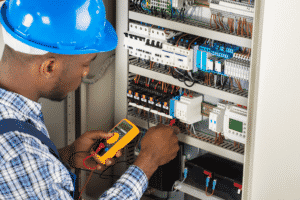
They play an essential role in keeping homes, businesses, and communities operating safely. Electrical professionals work on residential and commercial construction projects, maintain complex systems and troubleshoot technical problems. The variety of projects provides opportunities to develop expertise and explore different areas of the industry.
The job outlook is another bright spot. According to the U.S. Bureau of Labor Statistics, employment of electricians is projected to grow 9% from 2025 to 2035, much faster than the 3% average for all occupations.
Electrical work also appeals to people who enjoy solving problems and seeing tangible results. It requires technical knowledge and sound judgment, offering an interesting profession that combines practical skills with ongoing learning.
3. Earn while you learn. What’s not to like?
One of the biggest advantages of an electrical career is that you don’t need a four-year college degree to begin. And even better, you don’t have to wait until graduation to start earning a paycheck.
Electrical apprenticeships follow an earn-while-you-learn model, combining paid, supervised on-the-job training with classroom instruction. You’ll gain practical experience while developing the technical knowledge needed to succeed in the trade.
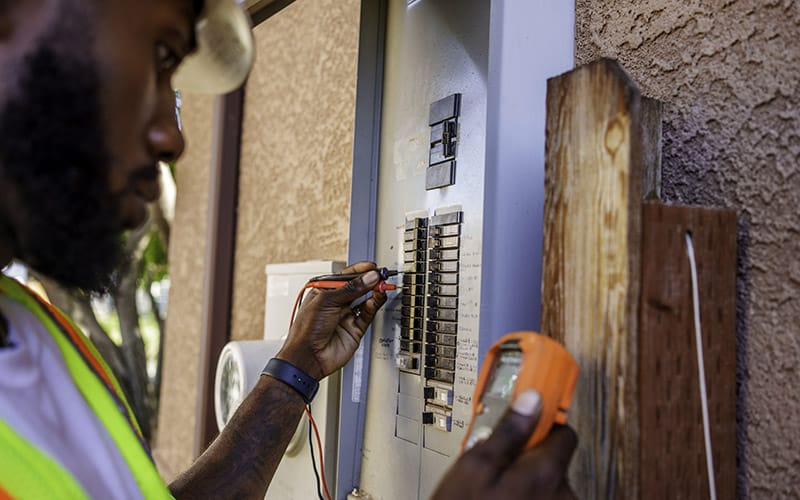
Working alongside experienced electricians, you’ll learn essential installation and troubleshooting techniques, with an emphasis on electrical safety. Classroom instruction reinforces what you gain on the job and prepares you for increasingly complex work.
IEC Chesapeake offers electrical apprenticeship and training opportunities to help you enter the industry and develop your professional qualifications.
Whether you’re exploring alternatives to college or considering a career change, an apprenticeship offers a practical starting point. You’re not just learning about a career. You’re already working toward one.
4. Your first job doesn’t have to be your forever job.
Completing an apprenticeship opens the door to a variety of career advancement opportunities.
As you gain experience, you might discover a passion for specialized electrical work or find yourself ready to take on a supervisory role. You could even decide to launch your own electrical contracting business.
Of course, not everyone dreams of becoming the boss. Developing advanced technical expertise can be just as rewarding, particularly as electrical systems become more sophisticated.
And here’s another advantage: The electrical industry never stands still. As technology evolves, new opportunities emerge, giving you the flexibility to explore different directions as your interests and goals change.
A job pays the bills. A career gives you something to build on. And in the electrical trades, the opportunities are yours to explore.
Frequently Asked Questions
1. What’s the difference between having a job and building a career?
An electrical job can be your starting point for a rewarding long-term career. As you gain experience, you can develop specialized skills, take on more challenging projects, and pursue opportunities for advancement.
2. Do you need a college degree to become an electrician?
No. Electrical apprenticeships offer an alternative to a four-year college degree through supervised training and classroom instruction. Licensing requirements vary by jurisdiction.
3. Can you earn money while completing an electrical apprenticeship?
Yes. Apprenticeships typically allow participants to earn wages while gaining hands-on experience and completing required instruction.
4. Is it too late to start an electrical career if you’re already working in another field?
No. Electrical apprenticeships can provide an entry point for adults interested in changing careers, regardless of their previous work experience.
5. What career opportunities are available after completing an electrical apprenticeship?
With additional experience and training, electricians can pursue specialized technical work, supervisory roles, project management or business ownership.
Is it a career or a job? With IEC Chesapeake, you don’t have to settle for just a paycheck. Our apprenticeship and training programs help you gain the skills and experience to build a rewarding career in the electrical trades. Explore our programs and discover where your future could take you.
Originally written by Jenny Boone